Entry Level Construction Pre-Employment Programme
CPCS & NPORS Accredited Courses
The Entry Level Construction Programme is a government-funded, two-week intensive course that prepares people with no construction experience for entry-level site roles. Run by Insite, the programme combines practical safety training, industry awareness, and employability support to get you genuinely site-ready. It covers everything from manual handling and cable avoidance to CSCS test preparation, CV writing, and interview skills at no cost to you.

Who Is This Programme For?
This programme is built for anyone who wants to work in construction but doesn't know where to start. That includes people with no industry experience looking for a structured way in, career changers coming from retail, hospitality, warehousing, or other sectors, school and college leavers exploring practical career options, and anyone who's been out of work and wants a clear route back into employment.
It's equally relevant if you're an employer looking for work-ready candidates. Graduates of this programme arrive with foundational site safety knowledge, an understanding of what's expected on a construction site, and the motivation to progress. They're suited to entry-level roles in labouring, groundworks, scaffolding, civils and utilities, house building, and infrastructure support.
Programme Structure
The programme runs Monday to Friday over two consecutive weeks. Week one focuses on employability and industry readiness, making sure you understand the construction sector, what employers are looking for, and how to present yourself effectively. Week two shifts to practical construction skills and accredited safety training, culminating in CSCS test preparation and support.
Week 01
Employability & Industry Readiness

You'll get a thorough introduction to the UK construction industry - the types of projects, the roles available, and what a typical day looks like on different kinds of sites. It establishes the mindset every employer expects: understanding risk, following procedures, and looking out for yourself and the people around you.
Workplace behaviours and communication sessions cover what it actually means to be professional in a construction environment - punctuality, teamwork, taking direction, and communicating clearly with supervisors and colleagues. The week finishes with practical employability support: CV writing tailored to construction roles, interview preparation with industry-specific scenarios, and guidance on finding and applying for entry-level positions.
Week 02
Construction Safety & Site Safety

This is where the hands-on training happens. Manual handling training teaches safe lifting techniques. Underground apparatus awareness (HSG47) covers how to identify and work safely around buried services. You'll learn to use cable avoidance tools (CAT) and signal generators (Genny) to scan the ground before any excavation work begins.
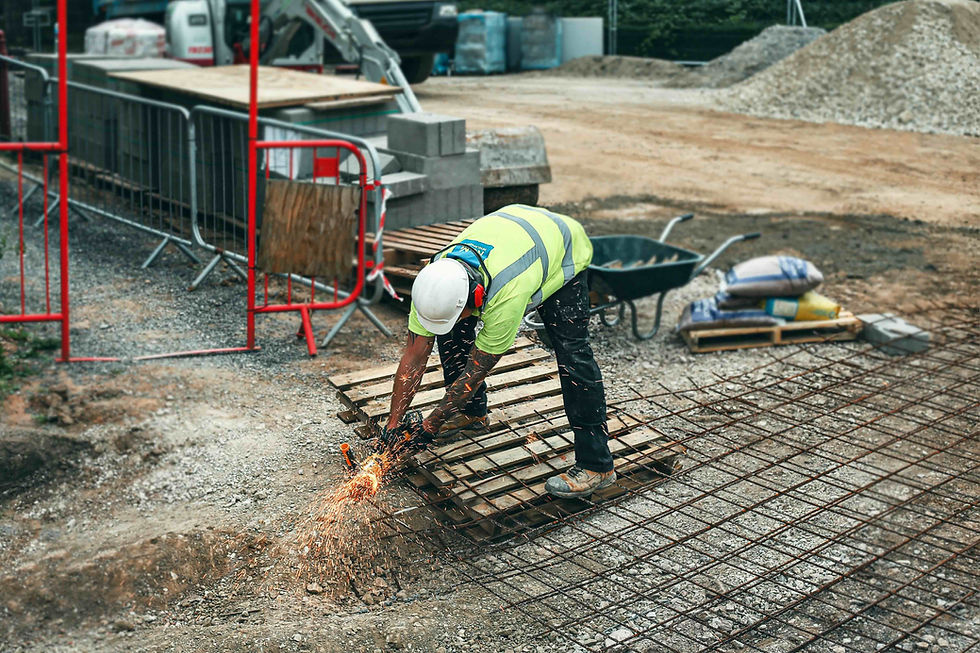
Safe digging practices cover hand-dig procedures and the precautions needed when working near underground services. PPE inspection and safe use ensures you can identify, select, and correctly use the personal protective equipment required on construction sites. You'll also train on the safe use of hand-held power tools and abrasive wheels - including petrol cut-off saws - which are standard equipment across most site roles.
Employer Benefits
Are you struggling to find reliable entry-level workers, this programme solves that. Graduates arrive with foundational site safety knowledge, an understanding of employer expectations, and the work ethic that comes from completing an intensive two-week commitment. That means less time and money spent on basic induction and onboarding - your new starters already know what PPE to wear, how to lift safely, and what a permit-to-work looks like.
The programme also creates a direct pipeline into further training. Graduates who show aptitude and ambition can progress straight into CPCS or NPORS plant operator courses - excavator training, dumper training, and other machine categories - giving you a route to grow your own skilled workforce rather than competing in a tight labour market for experienced operators.
